
Education is one of the biggest investments you will ever make. However, for many students, the price tag is higher than what they have in their savings accounts. This is where student loans come in.
If you are wondering how do student loans work, you aren’t alone. Understanding the mechanics of these loans is the first step toward achieving long-term financial independence. This guide will break down the process in simple English to help you borrow smart and stay in control of your future.
Table of Contents
What is a Student Loan?
A student loan is money borrowed from the government or a private lender to pay for college or university. Unlike grants or scholarships, this money is not free. You must pay it back, along with an extra fee called interest.
When you take out a loan, you are essentially making a deal: the lender pays your tuition now, and you promise to pay them back over several years once you finish your studies.
The Different Types of Student Loans
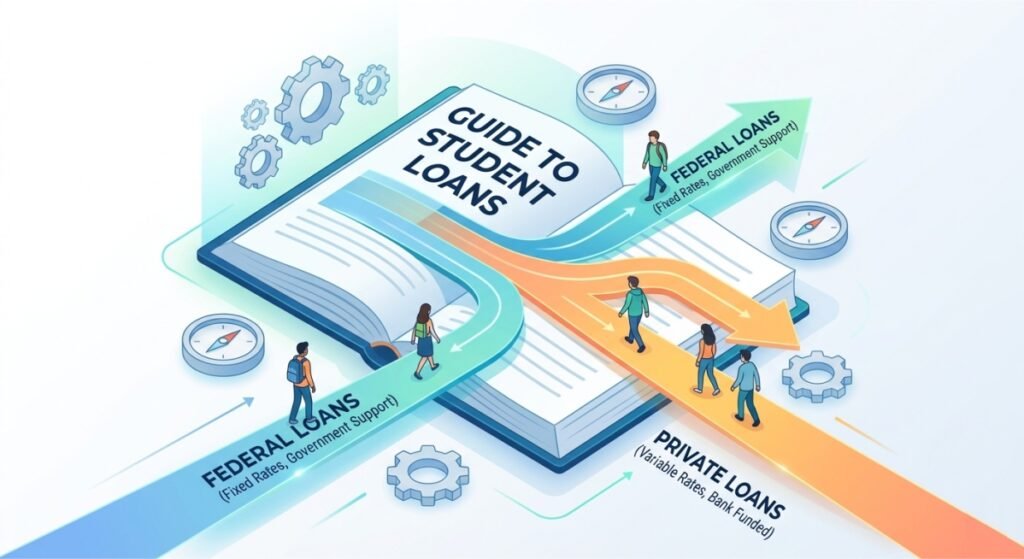
Not all loans are created equal. Knowing how do student loans work involves recognizing the two main categories:
1. Federal Student Loans
These are provided by the government. They are generally the best place to start because they offer lower interest rates and more flexible repayment plans.
- Subsidized Loans: The government pays the interest while you are in school.
- Unsubsidized Loans: Interest starts growing as soon as the loan is sent to your school.
2. Private Student Loans
These come from banks, credit unions, or online lenders. These are often used to bridge the gap if federal loans don’t cover the full cost. However, they usually require a good credit score or a “co-signer” (like a parent) to help you get approved.
Key Terms You Need to Know
To truly grasp how do student loans work, you need to understand the “language” of debt:
- Principal: The original amount of money you borrowed.
- Interest Rate: The percentage charged by the lender for letting you use their money.
- Disbursement: When the money is actually sent to your school to pay for classes.
- Grace Period: A short window of time (usually six months) after you graduate before you have to start making monthly payments.
How Interest Adds Up
Interest is the most important factor in your loan. If you borrow $10,000 at a 5% interest rate, you don’t just owe $10,000. Every year, a percentage is added to your balance.
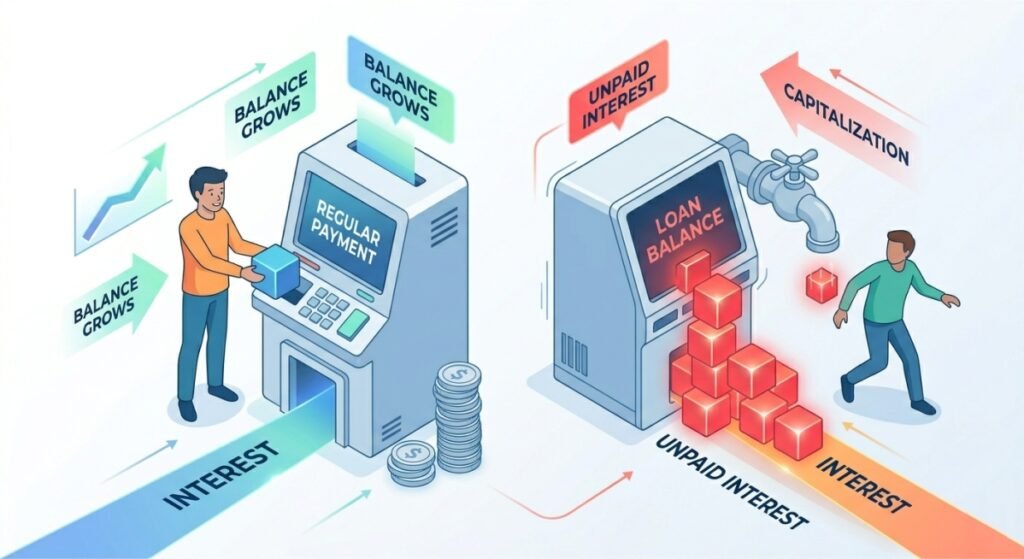
If you have an unsubsidized loan, that interest can “capitalize.” This means the unpaid interest gets added to your principal, and then you start paying interest on your interest. This is why some people find their balance growing even after they graduate.
How Do You Pay It Back?
The goal of every borrower at Be Financially Free is to clear debt efficiently. Most student loans offer a Standard Repayment Plan, which divides your total debt into equal monthly payments over 10 years.
However, if those payments are too high, there are other options:

- Income-Driven Repayment: Your monthly bill is based on how much money you earn, not how much you owe.
- Extended Repayment: You pay the loan back over 20 or 25 years to make the monthly cost lower (though you will pay more in interest over time).
- Loan Forgiveness: In some cases, if you work in public service or teaching, the government may cancel the remaining balance of your federal loans after a certain number of years.
3 Tips to Manage Student Loans Effectively
- Pay Interest Early: If you can afford even $20 a month while in school, pay the interest. This prevents it from piling up.
- Stick to a Budget: Use the 50/30/20 rule (Needs, Wants, Savings/Debt) to ensure you always have enough for your loan payment.
- Borrow Only What You Need: Just because you are approved for $20,000 doesn’t mean you have to take it all. Only borrow enough to cover tuition and essential living costs.
Summary
Understanding how do student loans work is about seeing the big picture. They are a tool to help you get an education, but they require a plan. By choosing federal loans first, watching your interest, and picking the right repayment plan, you can finish your degree without feeling trapped by debt.
Disclaimer: befinanciallyfree.net/ provides educational content on wealth protection. This article is for informational purposes only and does not constitute legal, medical or financial advice. Always consult with a licensed professional regarding your specific situation.